Questions and answers
Everything we are often asked, from the aurora to camera settings. Missing something? Ask Roy.
The year in Troms
When to come for what.
Northern lightsMid August to mid April
SnowNormally December to April
Polar night27 November to 15 January
Midnight sun18 May to 26 July
Common questions
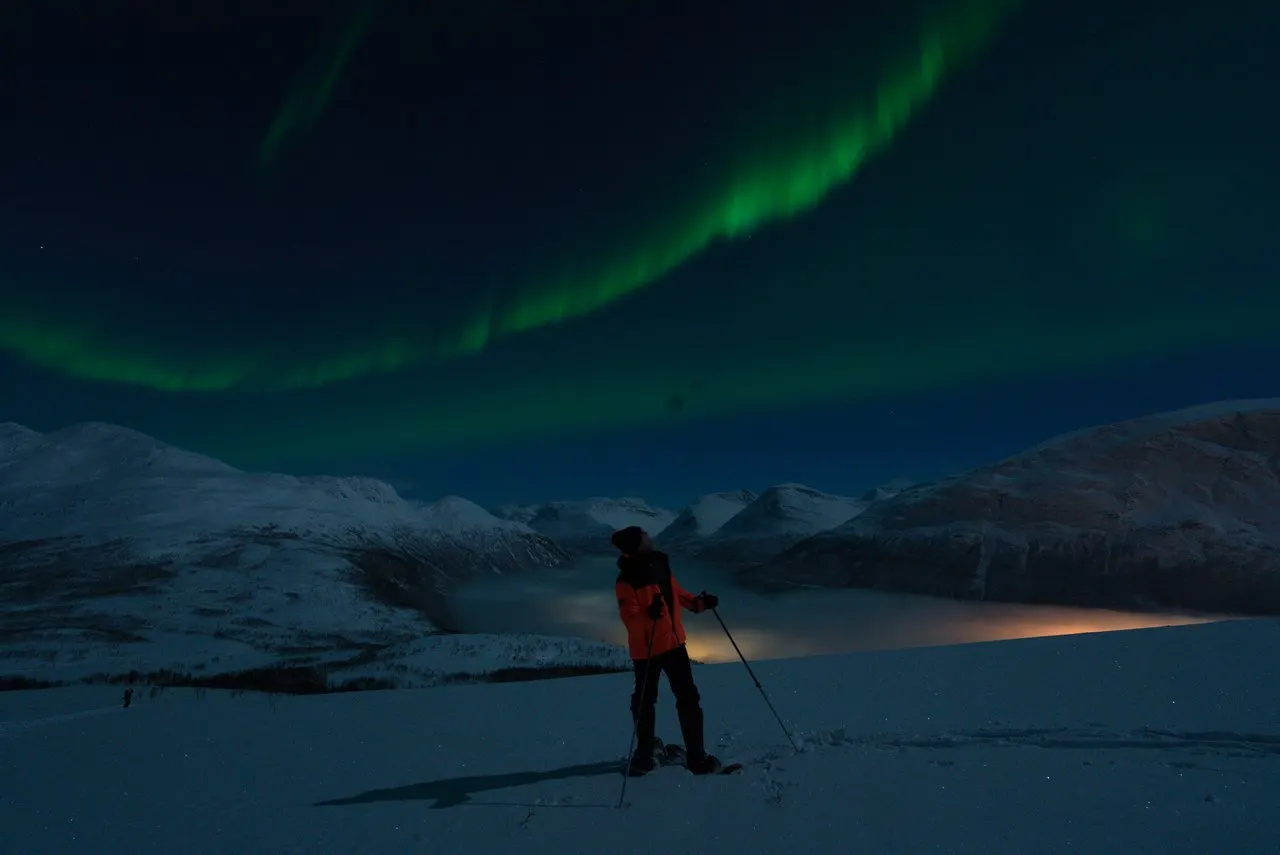
Is it guaranteed that we see the northern lights?
No. This is Mother Nature. Troms is in the middle of the aurora oval, so there is some activity most nights. Sometimes it lasts only minutes, other nights for hours. Sometimes it is so weak you only see it on a long exposure, other times so strong it looks brighter to the eye than in a photo.
Then there is the weather. The lights are higher than the clouds, so we need clear sky. We do our best to find it, which can mean driving up to 500 km in a night. On most days there is clear sky somewhere within that distance. So the lights are not guaranteed, but the chance is really good.
Can I get a refund if we don’t see the lights?
No, we do not give refunds. We do our best to give you a good experience and a good time anyway.
Can I check the aurora forecast myself?
Yes. Several websites show aurora activity, and many are easy to use. Remember that Troms is right in the aurora oval, so we can see the lights even at a low Kp index, Kp 0 or Kp 1.
What should I wear and bring?
Warm clothing, in several layers so you can adjust during the trip. If you get too warm first, it is easy to get cold when you go outside. Open your jacket and take your hat off while sitting in the bus.
A tripod is essential for a good northern lights picture. Without one you have to put the camera on the ground. We lend tripods on request.
Can I get vegetarian food?
Yes. Just let us know beforehand.
How to photograph the northern lights
Photography is an art, so feel free to experiment. These steps get you started.
ISO 3200f/2.810 seconds
Steady the camera
Use a tripod, or put the camera on the ground or another stable surface.
Avoid shake
Use the self-timer or a remote control.
Focus by hand
Switch to manual focus.
Start at ISO 3200, f/2.8, 10 seconds
Take a test picture. Too bright? Lower the ISO or shorten the exposure. Too dark? Use a longer exposure.
Keep adjusting
The lights, the darkness and the moon change all the time, and so should your settings.
A rule of thumb
Double the ISO and you can halve the exposure time for the same amount of light, but higher ISO adds noise.
Going from f/2.8 to f/4 means doubling the ISO or the exposure time. You get more depth of field, but more noise, and fast-moving lights lose their structure and turn into a green blur.